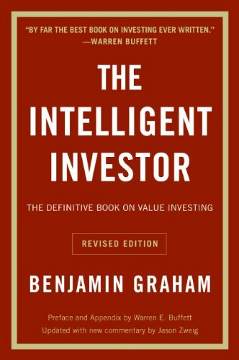
We have created a new and improvement Curious Cat Investment book site. Find great resources for your investing and personal finance needs. We have selected the best books by authors including: Benjamin Graham, Warren Buffett, John Bogle, Nicolas Darvas, Peter Lynch and William O’Neil.
Try out our recommended picks.
View the books by category including: investing, economics, retirement, real estate and personal finance.
Related: Curious Cat investing articles – Curious Cat management books – Teaching Children About Money Matters – Bogle on the Retirement Crisis
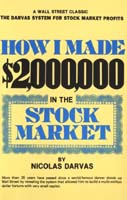
For the most part my investment philosophy is based on fundamental long term investing strategies. But I do also occasionally speculate with a portion of my portfolio. It is risky (and honestly most people will lose money trying so it is unwise for most, if not all, to try) but can bring great returns for the successful speculator/trader. My methods are significantly influenced by Nicolas Darvas who wrote the classic investment book – How I Made $2,000,000 in the Stock Market (which I am re-reading now). In it he provides an honest and open look at his experience from his naive start to his eventual success. He lays out, in great detail, exactly what he did and how foolish some of his actions were. Then he explains how he came to find success by focusing on the price and volume action of stocks and a pseudo fundamental component (more of a story that could presage future fundamental success than actual fundamental strength). While honing his investment strategy, in the 1950′s, he traveled the world working as a world class ballroom dancer and placed order via cable.
Darvas’ method was a forerunner of the many technical analysis schemes used today. He is extensively referenced by William O’Neil (of Investor’s Business Daily fame) and other leading technicians. An extremely simplified overview of Darvas’ method: determine “boxes” (trading ranges) for a stock and buy on the breakout, to the upside, of the topmost box. He used a rest period of several days to set the top of the box and then determine the bottom of the box after that top was set. He used very close trailing stop loss orders to minimize losses. He sought to make large gains (let his winners run) and cut losses quickly.
Nicholas Darvas’ ideas and books included a disdain for wall street insiders, analysts and rumors. The CAN SLIM (William O’Neil and Investor’s Business Daily) investing style owes a great deal to Darvas’ ideas on investing.
I have created a new twitter account for to comment and follow others trading ideas. I would suggest only experience and successful investors even consider trading with a small portion of their portfolio. For most it is a losing proposition.
More on Darvas’ investing ideas and other leading investors. Books by Nicolas Darvas: Wall Street: The Other Las Vegas – You Can Still Make It in the Market (republished after a long period when it was not available) – Darvas System for Over the Counter Profits
The economic clout of the USA has been huge since the end of World War II. The relative position has been decreasing recently with the rise of not only Europe and Japan but Korea, China, India, Brazil and many more. This means the risks to the USA of failing to deal with perennial problems (the most costly but not most effective health care system, spending beyond our means, weak diplomacy, excessive legal costs, poor management practices…) is higher today than it has been.
Fareed Zakaria’s Post American World is a good explanation of some of the current global economic forces in play. He comes to the same conclusion I do that the USA is still in the strongest position today. But the world is changing and the relative position of the United States is declining. The new world requires working with others and the USA needs to adjust to this reality. Too many think the USA can continue to act as though the rest of the world must comply with the wishes of the USA.
…
The litigation system is now routinely referred to as a huge cost of doing business, but no one dares propose any reform of it. Our mortgage deduction for housing costs a staggering $80 billion a year, and we are told it is crucial to support home ownership. Except that Margaret Thatcher eliminated it in Britain, and yet that country has the same rate of home ownership as the United States. We rarely look around and notice other options and alternatives, convinced that “we’re number one.”
…
America has become a nation consumed by anxiety, worried about terrorist and rouge nations, Muslims and Mexicans, foreign companies and free trade, immigrants and international organizations. The strongest nation in the history of the world now sees itself as besieged by forces beyond its control.
The book focuses quite a bit on the USA, China and India and provides good overviews of the economic strength and weaknesses of those countries. The USA is in a leadership position but the future requires an understanding that others deserve to be treated as partners not allies to be dictated to. If not they will just partially disengage with the USA and create stronger relationships with others. That would not be in the interests of the USA.
Related: Best Research University Rankings (2008) – Dr. Deming’s 7 Deadly Diseases of Western Management – Science leadership and economic growth – Easiest Countries for Doing Business (2008) – Top 12 Manufacturing Countries in 2007 – Why America Needs an Economic Strategy – Country H-index Rank for Science Publications – USA Spent $2.2 Trillion, 16.2% of GDP, on Health Care in 2007
William Black wrote The Best Way to Rob a Bank Is to Own One: How Corporate Executives and Politicians Looted the S&L. I think he a bit off on the “owning one,” being the best way to loot. The looters are not owners, they are executives that loot from owners, taxpayers, customers… And those looters pay politicians a great deal of money to help them. He appeared on Bill Moneys Journal discussing the huge mess we know are in and how little is being done to hold those responsible for the enormous crisis created by them.
…
The FBI publicly warned, in September 2004 that there was an epidemic of mortgage fraud, that if it was allowed to continue it would produce a crisis at least as large as the Savings and Loan debacle. And that they were going to make sure that they didn’t let that happen. So what goes wrong? After 9/11, the attacks, the Justice Department transfers 500 white-collar specialists in the FBI to national terrorism. Well, we can all understand that. But then, the Bush administration refused to replace the missing 500 agents. So even today, again, as you say, this crisis is 1000 times worse, perhaps, certainly 100 times worse, than the Savings and Loan crisis. There are one-fifth as many FBI agents as worked the Savings and Loan crisis.
…
Well, certainly in the financial sphere, I am. I think, first, the policies are substantively bad. Second, I think they completely lack integrity. Third, they violate the rule of law. This is being done just like Secretary Paulson did it. In violation of the law. We adopted a law after the Savings and Loan crisis, called the Prompt Corrective Action Law. And it requires them to close these institutions. And they’re refusing to obey the law.
…
In the Savings and Loan debacle, we developed excellent ways for dealing with the frauds, and for dealing with the failed institutions. And for 15 years after the Savings and Loan crisis, didn’t matter which party was in power, the U.S. Treasury Secretary would fly over to Tokyo and tell the Japanese, “You ought to do things the way we did in the Savings and Loan crisis, because it worked really well. Instead you’re covering up the bank losses, because you know, you say you need confidence. And so, we have to lie to the people to create confidence. And it doesn’t work. You will cause your recession to continue and continue.”
…
And their ideologies, which swept away regulation. So, in the example, regulation means that cheaters don’t prosper. So, instead of being bad for capitalism, it’s what saves capitalism. “Honest purveyors prosper” is what we want. And you need regulation and law enforcement to be able to do this. The tragedy of this crisis is it didn’t need to happen at all.
Related: Fed Continues Wall Street Welfare – Credit Crisis the Result of Planned Looting of the World Economy – Lobbyists Keep Tax Off Billion Dollar Private Equities Deals – Poll: 60% say Depression Likely – Canadian Banks Avoid Failures Common Elsewhere – Too Big to Fail – Why Pay Taxes or be Honest
Scott Adams does a great job with Dilbert and he presents a simple, sound financial strategy in Dilbert and the Way of the Weasel, page 172, Everything you need to know about financial planning:
- Make a will.
- Pay off your credit cards.
- Get term life insurance if you have a family to support.
- Fund your 401(k) to the maximum.
- Fund your IRA to the maximum.
- Buy a house if you want to live in a house and you can afford it.
- Put six months’ expenses in a money market fund. [this was wise, given the currently very low money market rates I would use "high yield" bank savings account now, FDIC insured - John]
- Take whatever money is left over and invest 70% in a stock index fund and 30% in a bond fund through any discount broker, and never touch it until retirement.
- If any of this confuses you or you have something special going on (retirement, college planning, tax issues) hire a fee-based financial planner, not one who charges a percentage of your portfolio.
Anyone involved in finance should understand mania in the markets. It is not a shock that financial markets do irrational things. They do so very frequently. Anyone who has not read, Manias, Panics, and Crashes: A History of Financial Crises, should do so. Leverage often is a catalyst that turns bad investments into panics that damage the economy. A previous post on this topic: Misuse of Statistics – Mania in Financial Markets.
Enron was the pit canary, but its death went unheeded
As for the lessons we’ve forgotten, how about this one: financial statements aren’t supposed to be fairytales.
…
when all was booming, Wall Streeters said they deserved their pay because the market said they were worth it. But now things are falling apart, they say the market doesn’t work, and we need to stop short-selling, and taxpayers need to pony up. If there is a tiny bit of good in all this, it’s that Wall Street, although it was complicit in the Enron mess, managed to walk away relatively unscathed. This time, Wall Street has brought itself down.
I think the odds that Wall Street has brought itself down is very low. Even that the ludicrous excesses of Wall Street are at risk is very unlikely. Perhaps for a few years their might be some restraints put on excesses. But most likely politicians will respond to huge payments by arranging favors for those that want to bring excesses back. If this can be prevented that would be great, but I doubt it will.
Related: Investing books – Tilting at Ludicrous CEO Pay – Losses Covered Up to Protect Bonuses
Creating a World Without Poverty by Muhammah Yunus (founder of the Grameen Bank and 2006 Nobel Peace Prize recipient). Giving people the opportunity to advance economically is something I see as very important. It is hard to imagine in the USA when those that are seen as poor have air conditioning, indoor plumbing, cars, TVs, electricity… but billions of people would love to approach such material wealth.
When you really have to struggle to put food on your plate or get clean water economic concerns are critically important. Economic progress may well decide whether your children live or not. Muhammah Yunus’ new book is a good read to hopefully encourage more people to realize there really are much more important things than your fourth pair or shoes (to say nothing of you 20th pair) or expensive wine or a newer car or…
Microfinance is a great system where those that have been lucky to receive material wealth can help provide opportunity to others. Loans of $200-$500 can make a huge difference in an entrepreneurs life. Just giving them the chance to use their intellect and hard work to create a life where they can get raise themselves slightly can change their lives, their children’s lives and together with others perhaps their community.
Trickle Up, Kiva and Grameen Bank are three great ways to help give entrepreneurs a chance to improve their lives. As I have mentioned before if you are a Kiva lender add a comment with your Kiva page and I will add a link to: Curious Cat Kiva Supporters. I will say I am happy with the success of this blog in general, the thing that disappoints me is how few links we have on that page.
Related: Microfinancing Entrepreneurs – Interview with Mohammad Yunus – Trying to Keep up with the Jones – Providing a Helping Hand via Kiva – Curious Cat Science and Engineering blog posts on appropriate technology
In response to: What do you think? Should you discuss finances with your children?
…
We both waffle back and forth on these two perspectives and right now we’ve settled somewhere in between. Our children know we have debt, but don’t know the amount. They know I make pretty decent money, but don’t know how much. Our older boys pretty much know the details of our monthly expenses, such as the cable bill, phone bill, utility bills, etc. We’ve shared this with them to help them appreciate things a little more.
I definitely think talking about finances with children is important. I don’t have kids, but I was one  I don’t think you need to get into exactly what the figures are to have valuable conversations. Far too many people become adults with far too poor an understanding of personal finance. Given how important managing money is today I think it is like hunter-gathers not teaching a kid how to hunt.
Books: Money Sense for Kids – Growing Money: A Complete Investing Guide for Kids – The Motley Fool Investment Guide for Teens – Raising Financially Fit Kids – A Smart Girl’s Guide to Money: How to Make It, Save It, And Spend It
A few blog posts on teaching children about money: Personal Finance for Children and Pre-Teens – 5 Tips for Savvy Parents – Teach your teen the basics of money management
Related: Questions You Should Ask About Your Investments – Why Americans Are Going Broke – How Not to Convert Home Equity